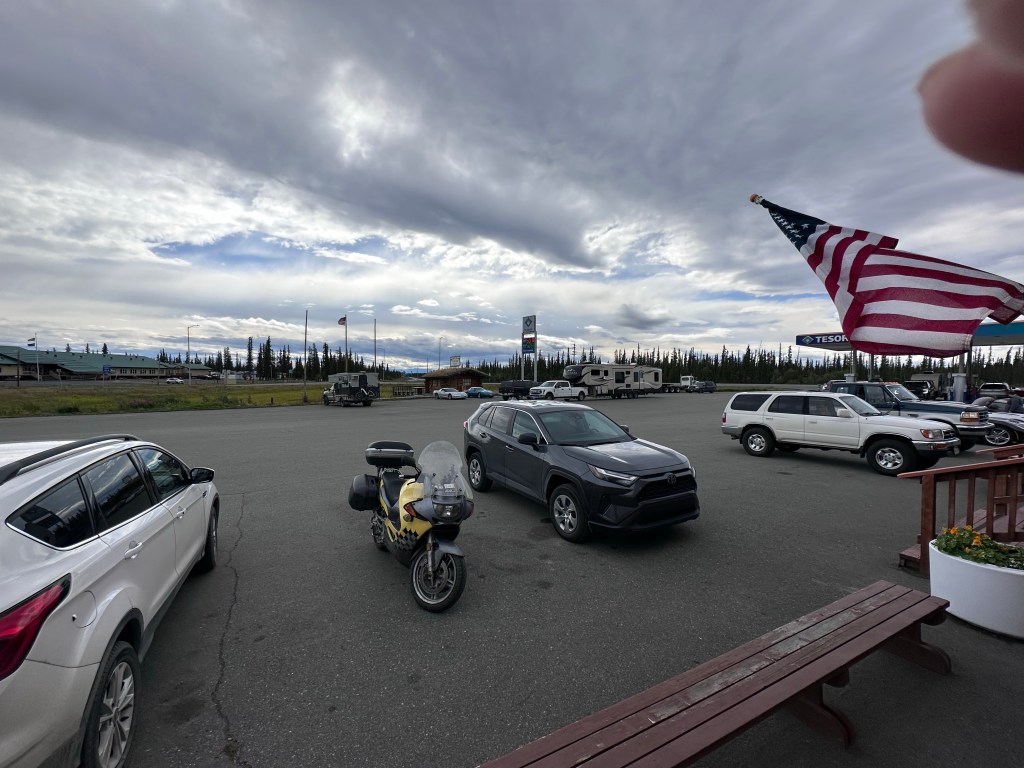
I’m now 190 miles from Anchorage, at a junction of roads to either Valdez or Anchorage. Locals call the center of town the „Hub of Alaska.“ It is centered around the all important gas station, which I visited with relief after arriving yesterday from Tok.
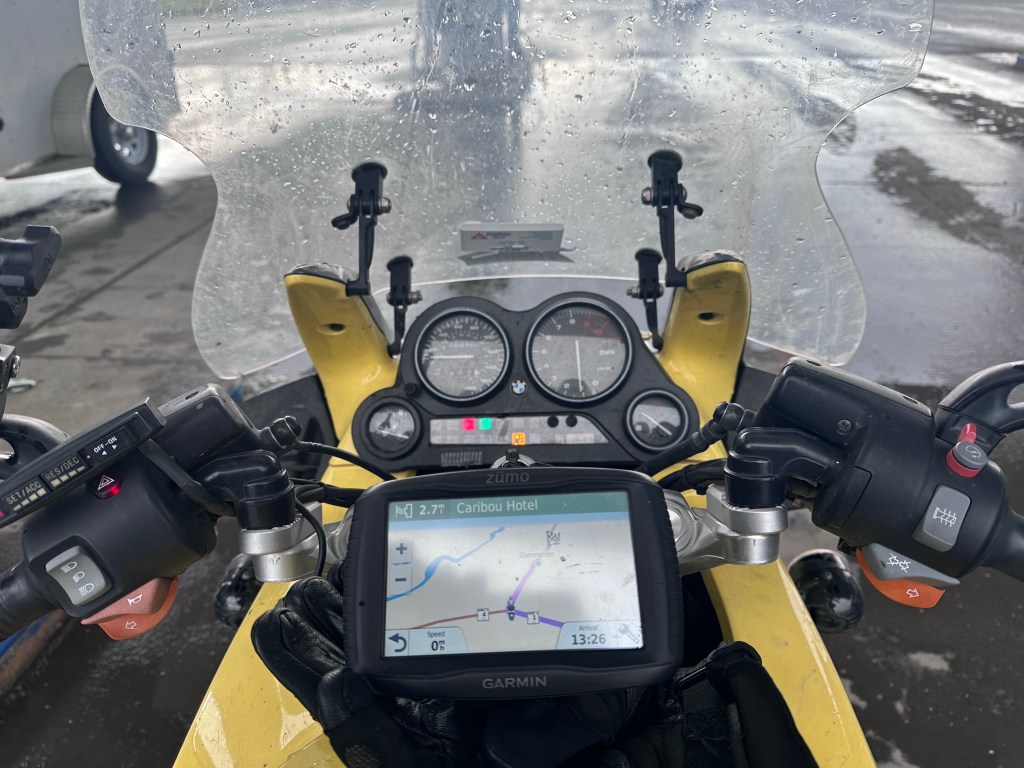
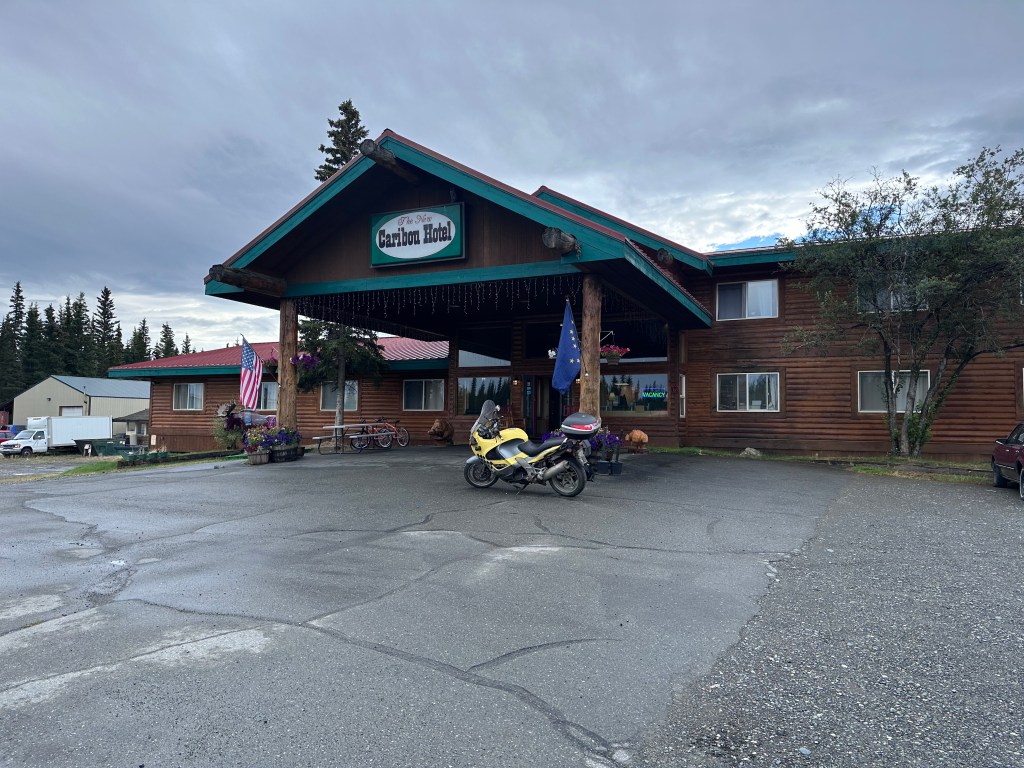
Caribou Hotel: A Touch on the Melancholy Side
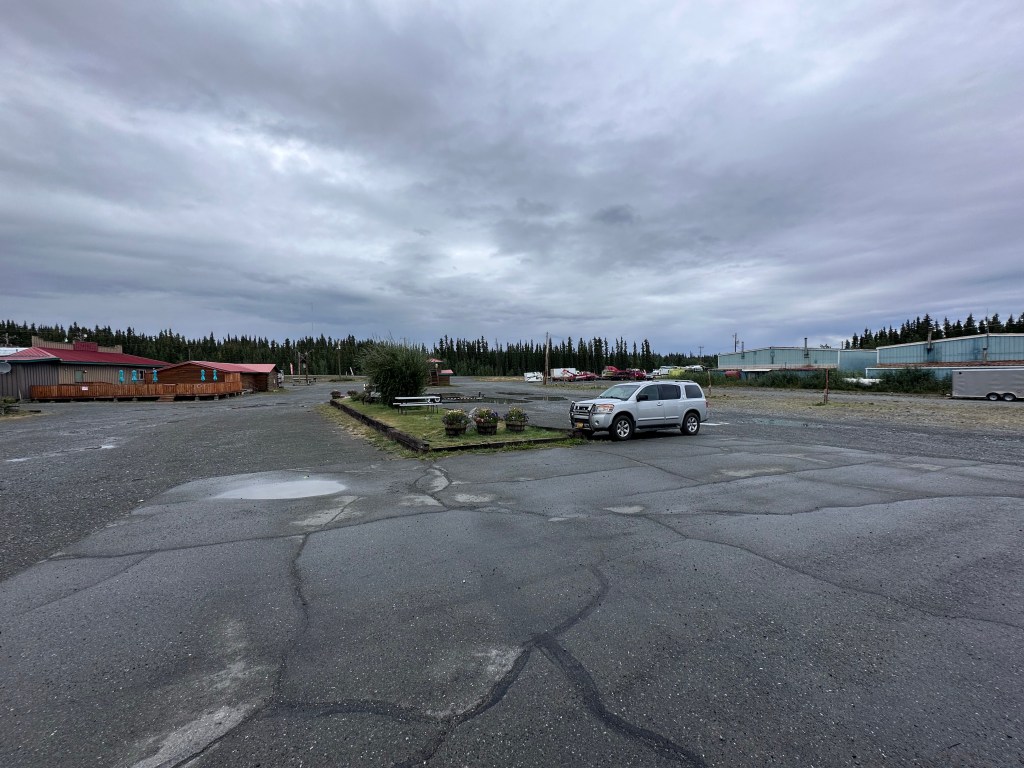
The Price of ‚No Sales Tax‘
Alaska has no State sales or income tax. Some municipalities do levy a tax on sales, but many don‘t, including Glennallen. I talked to a local who described the tradeoff.
Other than plowing the State roads, everything must be done privately. No trash pickup. You hire someone to take your trash to a landfill, or you take it there yourself. Either way, very expensive.
Mostly septic tanks and outhouses, except for three miles of sewer line along the highway, which was done privately. If you are lucky enough to be connected, there is a steep ongoing fee.
No public water supply. The permafrost allows wells to be drilled only in very particular spots. Most people must truck in water under private arrangements.
The hospital was converted to a weekday only clinic. Even then there is often no provider available. It is in general difficult to find help for any service.
Like Roads, Like Houses
Adding to expenses is that houses shift as permafrost surfaces melt and re-freeze. Just like the roads. Rich corporations sink steel girders into the ice, and rest buildings on them. But regular houses are usually built on blocks and then wobble around on them.
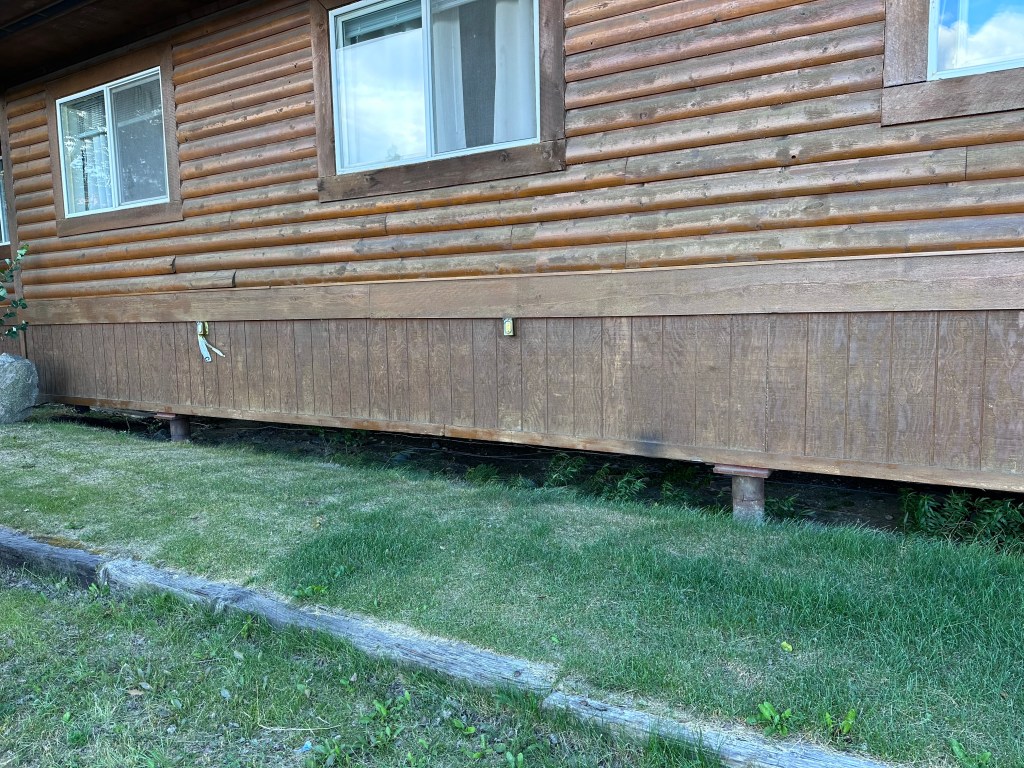
The area is now losing daylight at a rate of six minutes per day. A lot of drugs, depression, and suicide during the Winter. There will be down to just five hours of weak daylight then.
Some outside people try to live here, but many leave, because it is too hard.
Copper Basin 300 Dog Sled Race
The town does come to life in January during the annual CB 300 dog sled race. It is a qualifying event for the Iditarod competition. About 50 contestants participate, of which about 20% drop out part of the way. The event unfolds over two days, and is staffed entirely by volunteers. No sales tax, no public events.
Photos and a movie are in the visitors center. That‘s where the following photos are from:
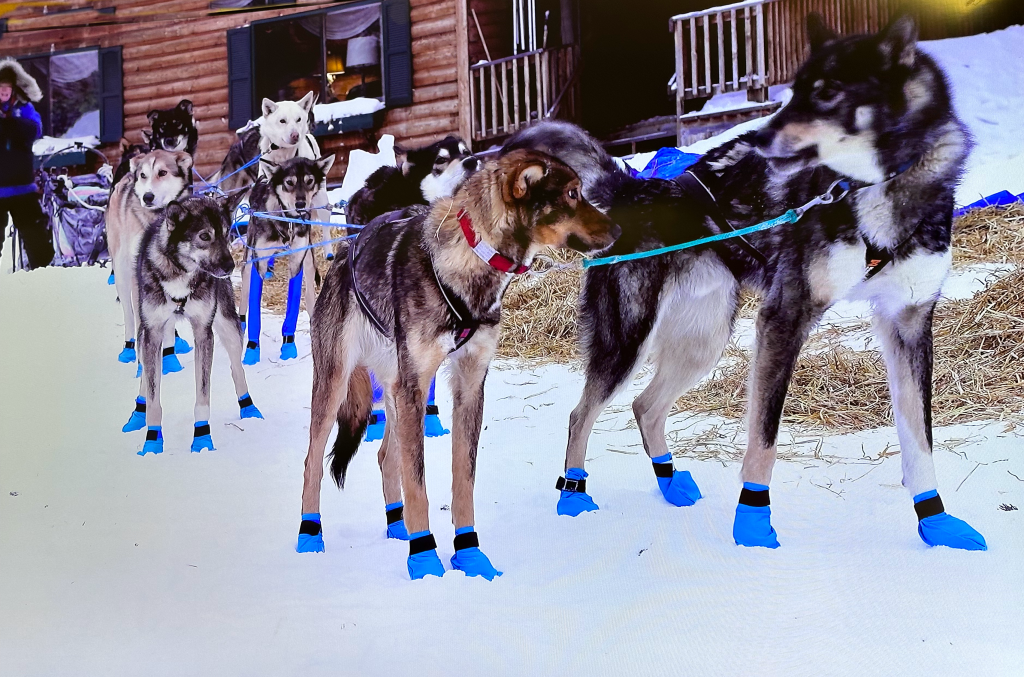
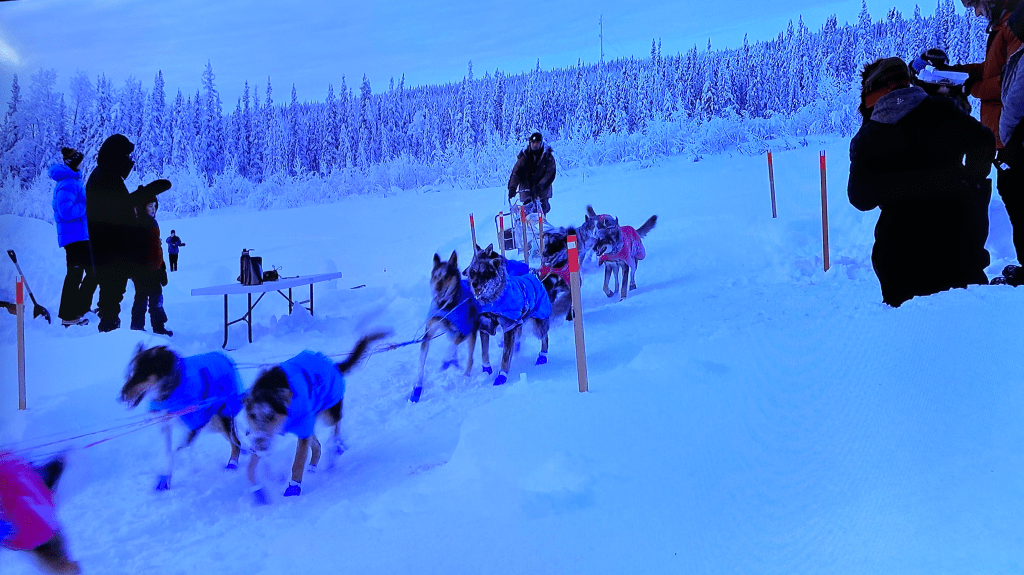
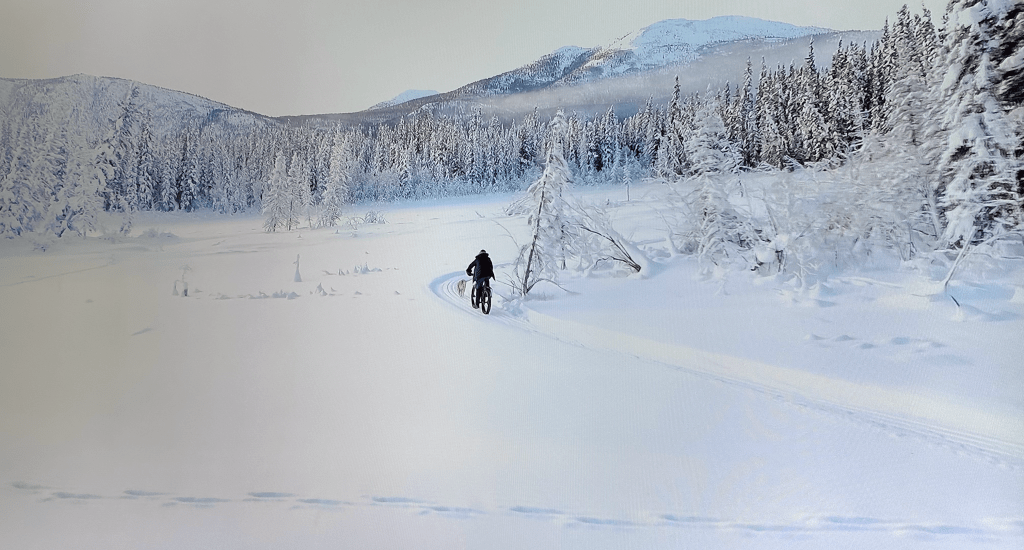
The booties protect the paws. Some dogs hate them, others get excited when you put them on. Mushers train year around. In summer they use wheeled ‚sleds. ‘ The job is expensive, as you need to feed all these dogs, and pay vet bills. Prize money is nominal, at least for the qualifying races.
The CB300 has two required rest stops, and several more available to those in need. The dogs curl up, and rest, and there is heat and food for the humans. But the dogs are bred to love running. Their active years are about two to six years of age.
You must reach the final destination with at least six dogs still running.
Other Local Winter Hobbies
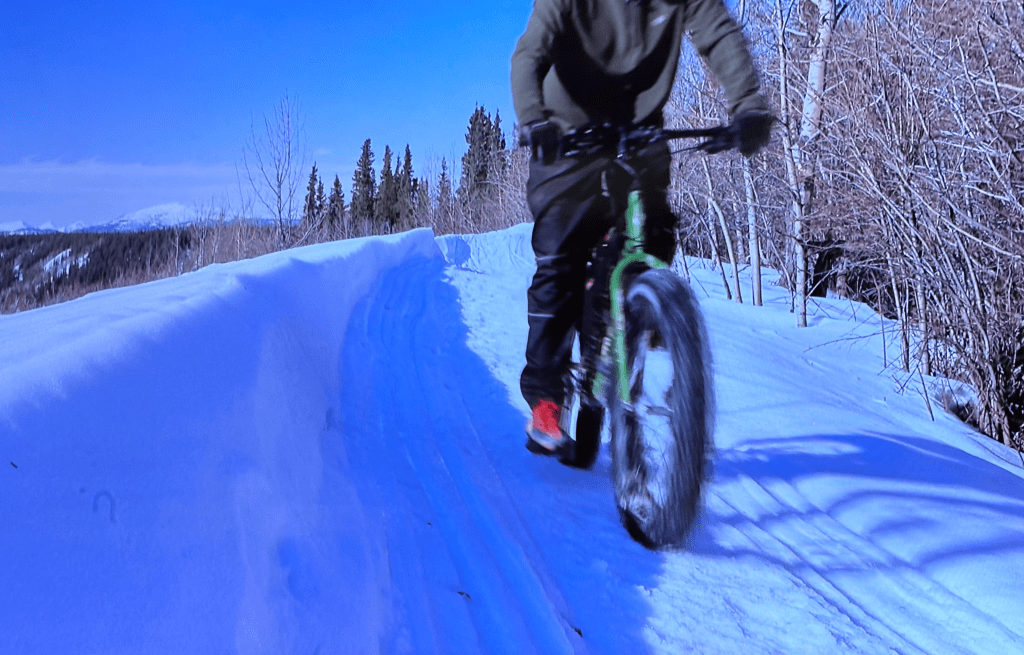
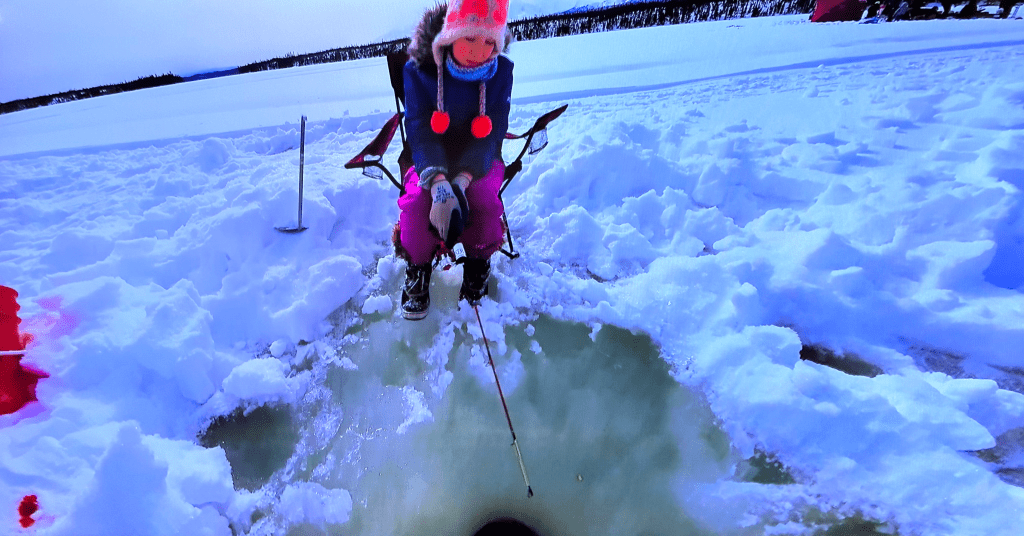
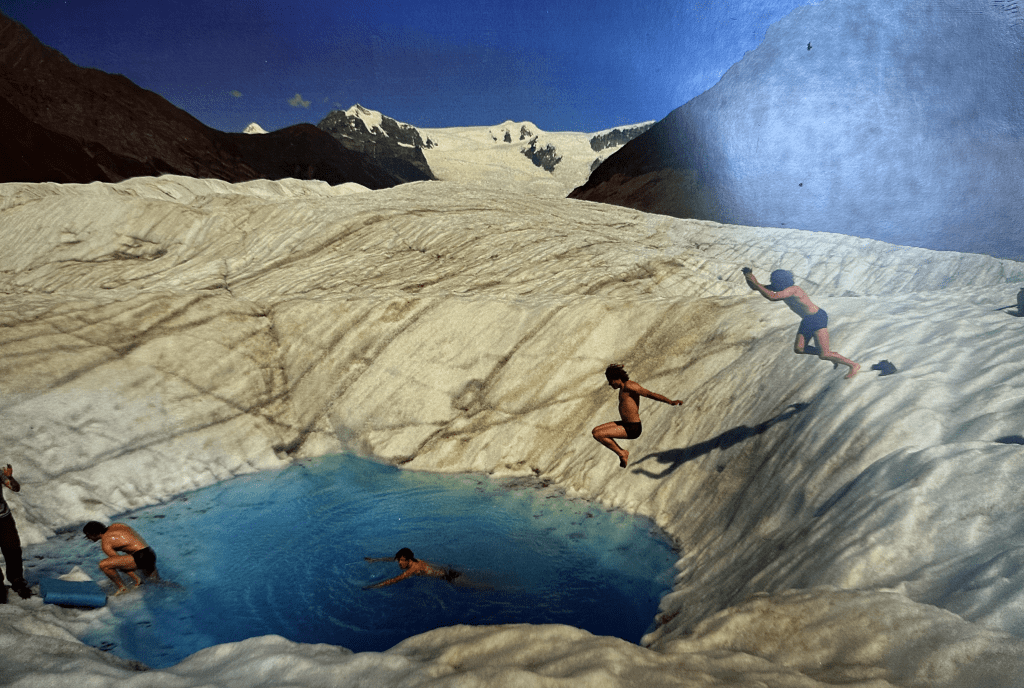
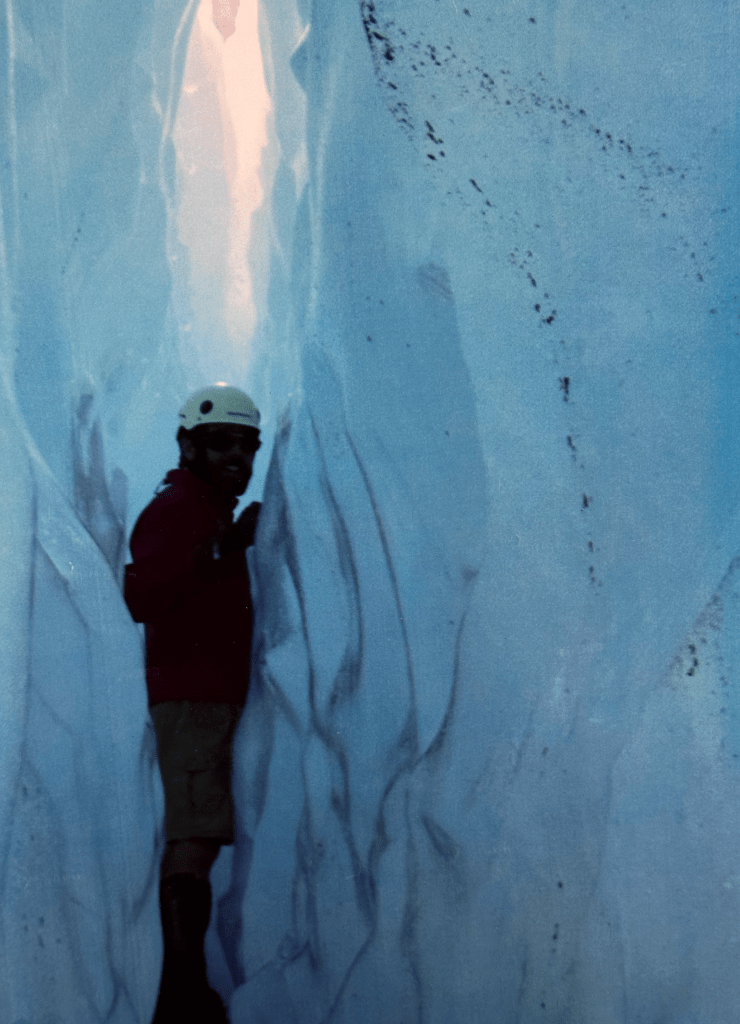
Hanging out in crevasses, knowing that glaciers move feels eery. The winter swim feels insane.
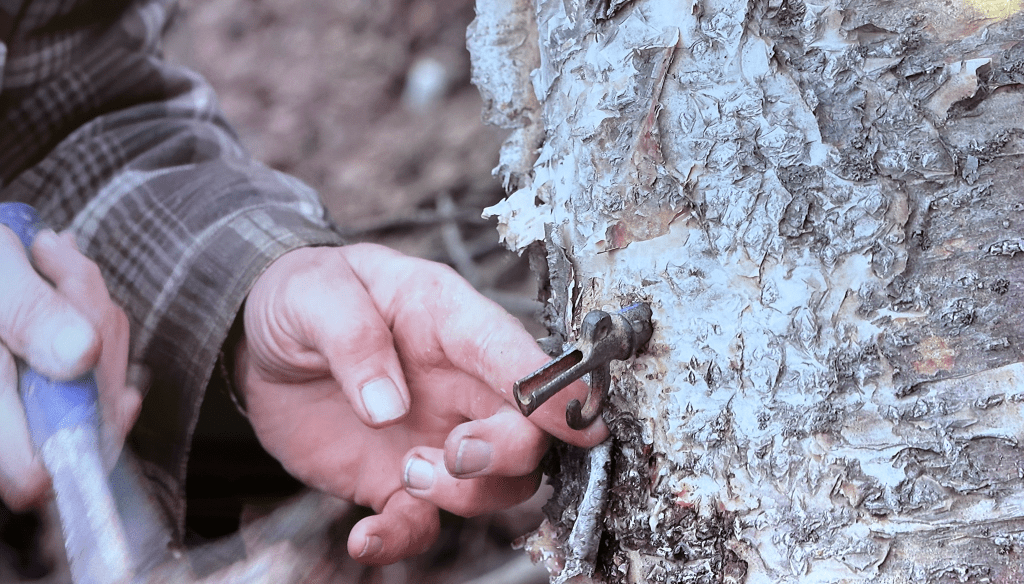
There is also the patience-testing birch tree milking for syrup:

Landscape Summary (Tok—>Glennallen)
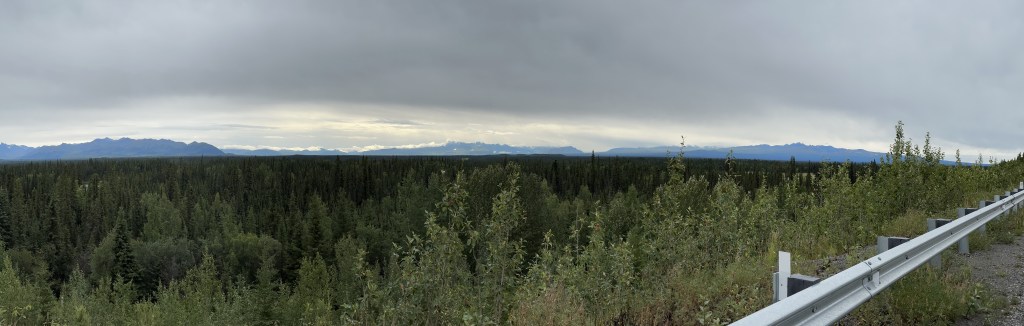
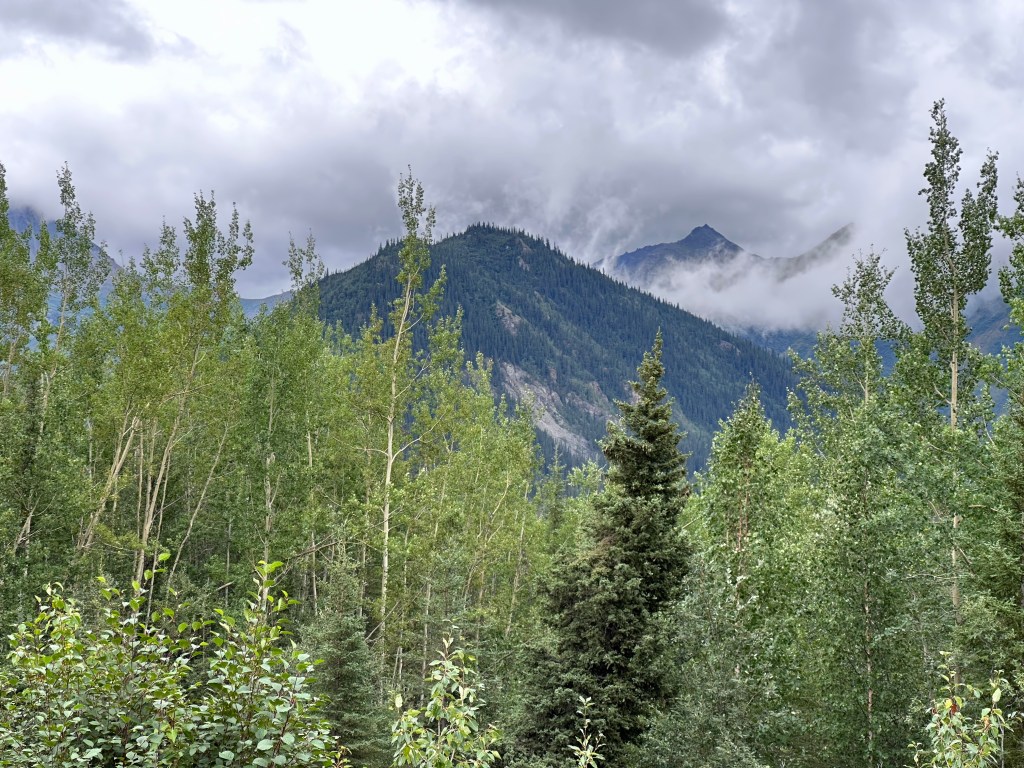
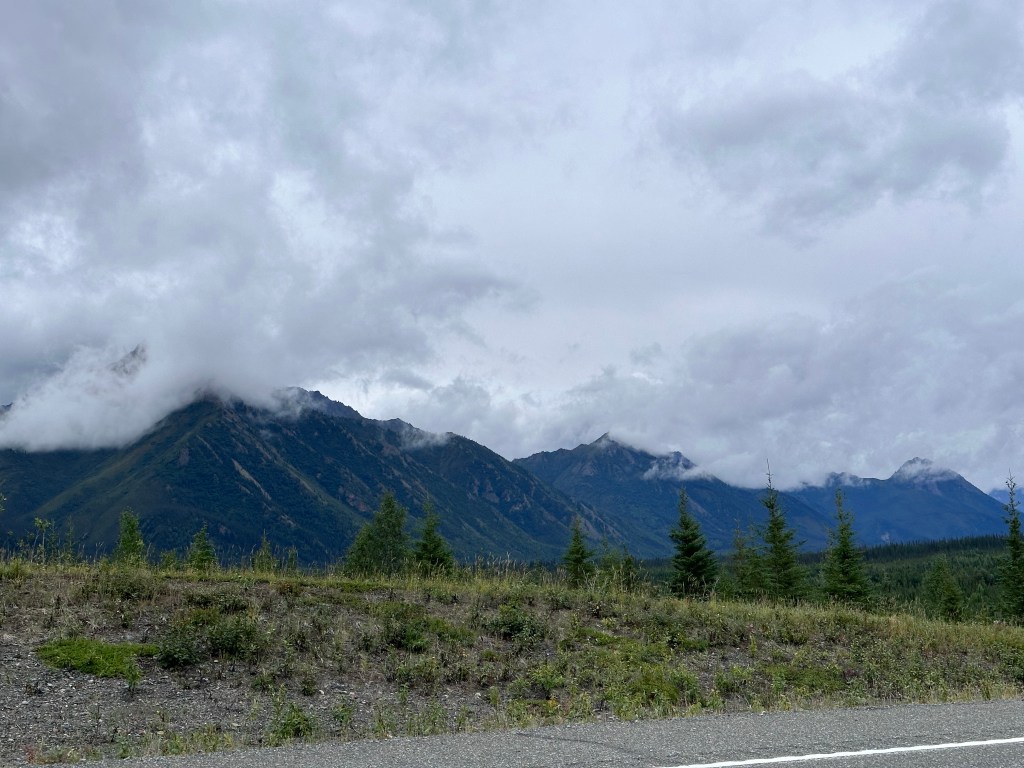
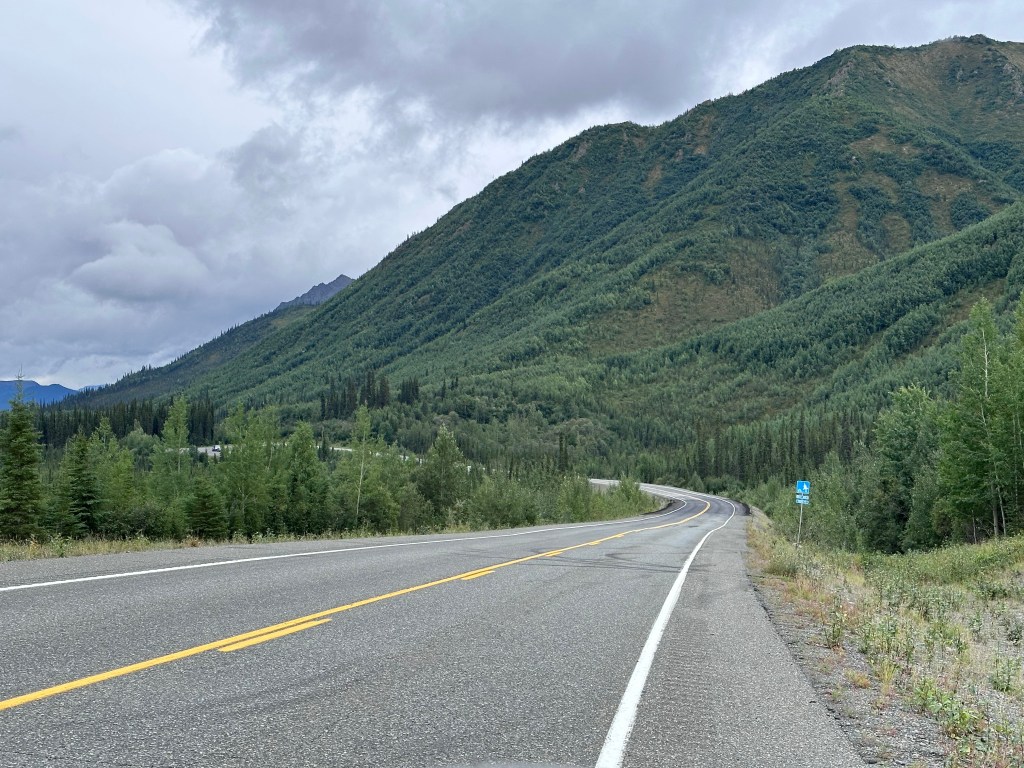
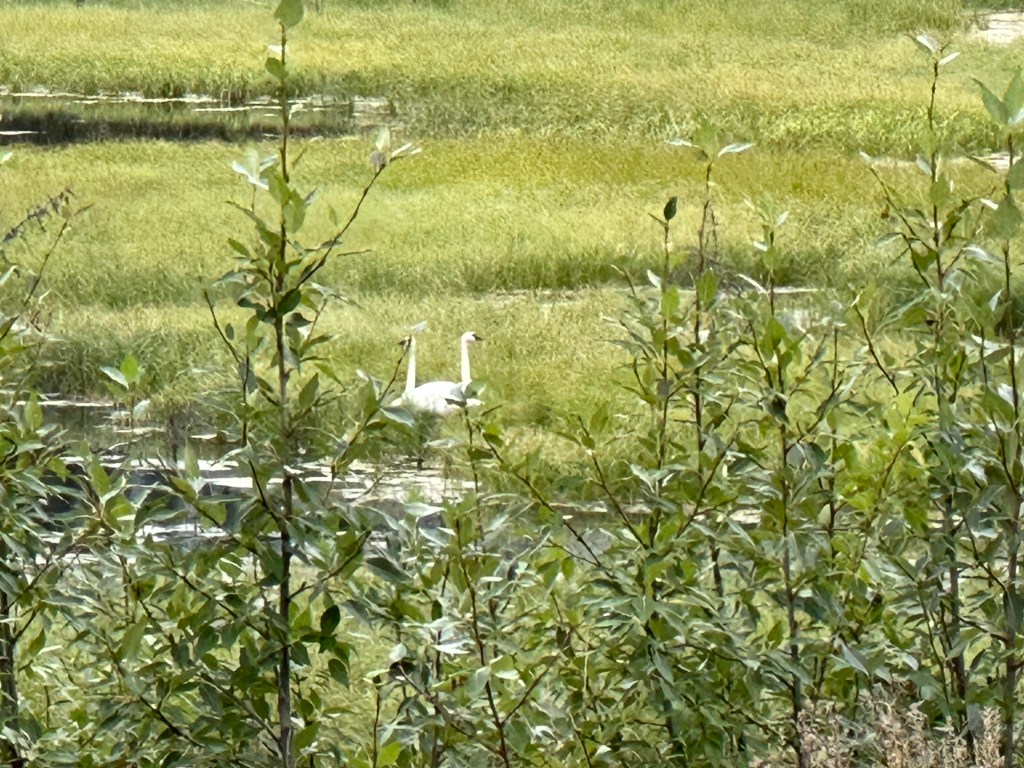
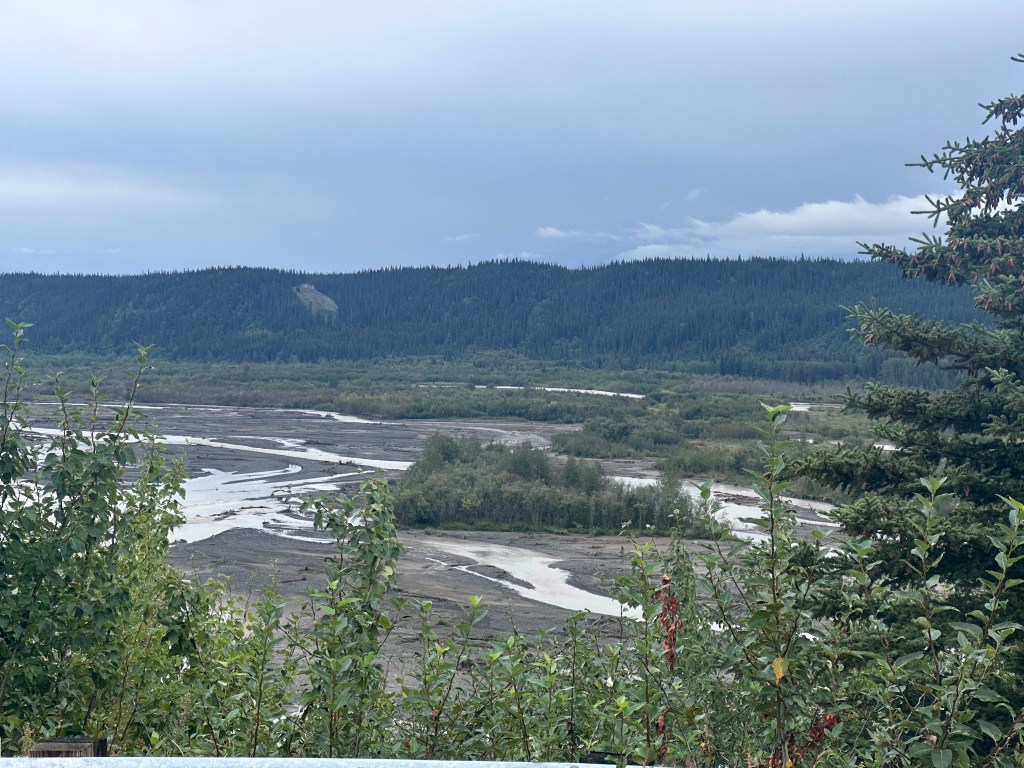
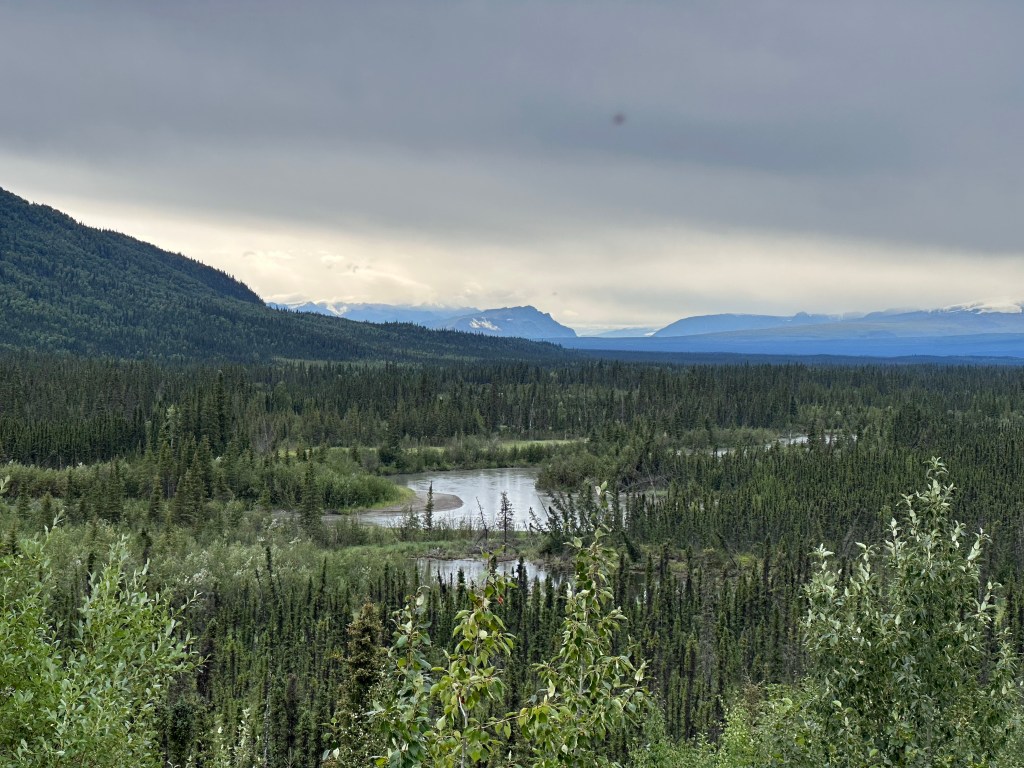
I finally saw these mythical trumpeter swans (photo 5). They are six feet long, and reach wingspans up up to 10 feet. Many nature related plaques mentioned them.
S100 or Muc-Off?
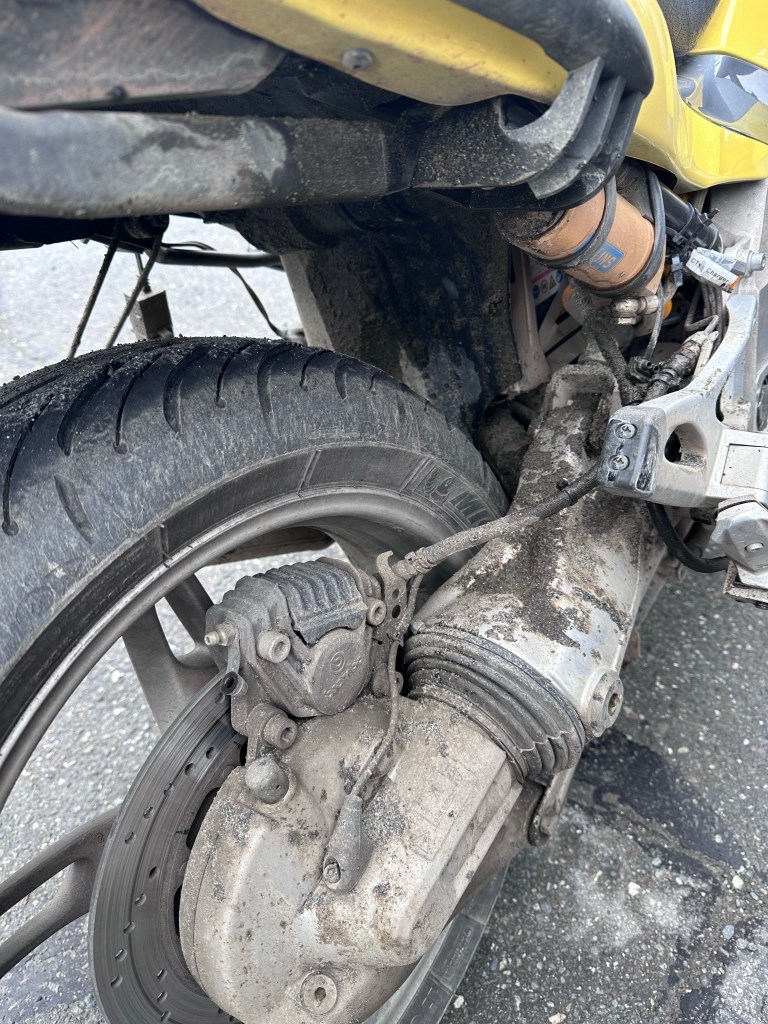
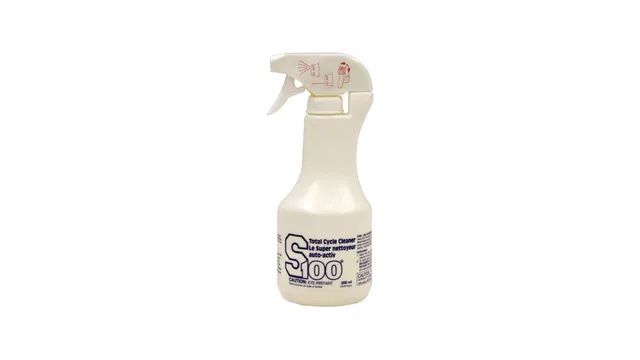
Eventually I will have to face cleaning this bike. There is a CNET Winner, and a runner-up. The winner is S100. This product is a “Total Cycle Cleaner.“ Who doesn‘t want ‘total’ ??? As in ‘complete,’ ‘successful to perfection,’ ‘couldn’t be better’, ‘a full circle, rather than just a slice’?
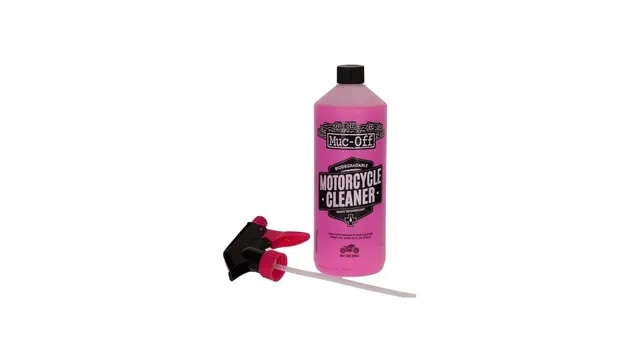
The runner-up is “Muc-Off Nanotechnology Motorcycle Cleaner.” It came in second, and who wants the one that didn’t quite cut it? Also, S100 sounds a lot more professional, don’t you think? On the other hand, Muc-Off is “Nanotechnology”!!! That’s probably really advanced. I bet this product was developed by people with Ph.D. degrees!
What makes the choice agonizing, though, is that Muc-Off is biodegradable. I love that part. And yet. It’s second-best. And it’s pink! It looks like Amoxicillin. What to do?
3D Editing
If you never edited GoPro, or Insta360 footage, here a tiny explanation of how it works. Just skip to the two video examples in the next section if video editing doesn’t float your boat. Summary: it’s like regular video editing, but with all directions available at all times.
I only know the Insta360, but assume the GoPro is similar.

The device has two identical 180 degree lenses, one on both sides, opposite each other. When shooting video, two movies are created, one on each side.
The video editor software stitches the resulting two visual half-spheres together. At any moment, i.e. frame in the editor you can rotate the frame’s full 360 view, and you can tilt it. That is, you can set the frame such that the viewer looks at any part of the sphere that you wish. In addition, you can zoom in or out.
The editing job is to scroll along time with a sideways flicking motion, and observing the movie. At any point you can set a keyframe. This action declares that moment’s view to be a kind of anchor. And here comes the cool part.
Say, you declare a keyframe 3 seconds into the movie. The editor notes which part of the sphere you have chosen to show, and how far you have zoomed in. Here is what this looks like in the iPad editor. Say, we are at 3 seconds. The ‘plus’ sign sets a keyframe:
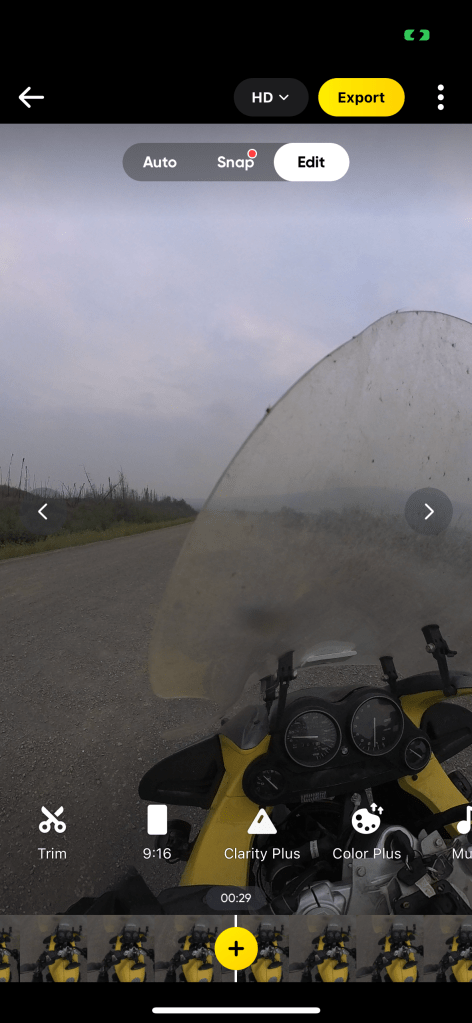
Now you scroll forward in time by swiping the timeline, and set a second keyframe at 5 seconds. You adjust that keyframe to show a different part of the sphere, maybe even the opposite side. In the screenshot below I have moved forward in time a bit. At that point I used my finger to rotate the image. In this case just along the horizon to go for a horizontal pan. I set another keyframe here:
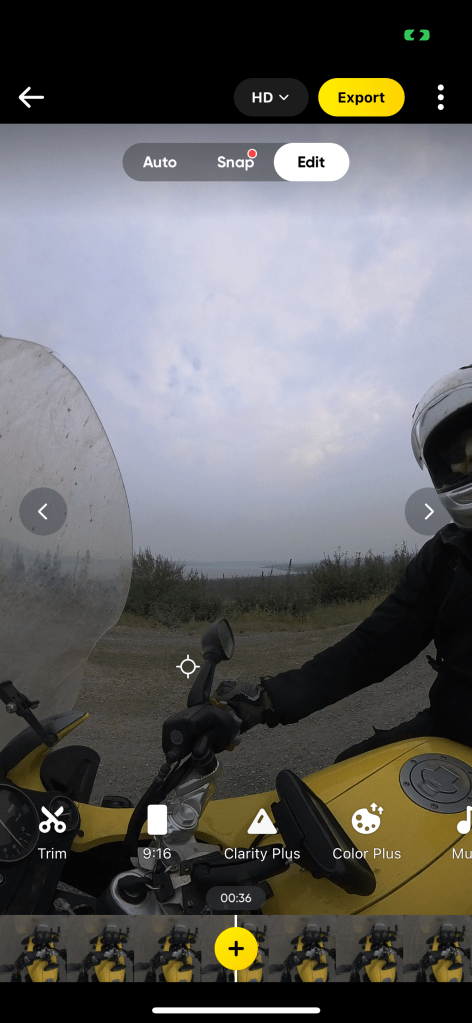
When you play the result back between the 3 and 5 second marks, the movie will during these two seconds smoothly rotate the view from what it was at 3 seconds, to end up to what you set it at 5 seconds. The speed at which that change occurs is determined by the distance between the two keyframes. The farther you pull them apart in time, the more slowly the view change will occur.
The editor will compute which part of the sphere to show at each fraction of a second, such that the panning effect is smooth, and arrives at the point in the sphere that you set in the destination keyframe. We can continue to rotate the virtual camera to look backward from our original view:

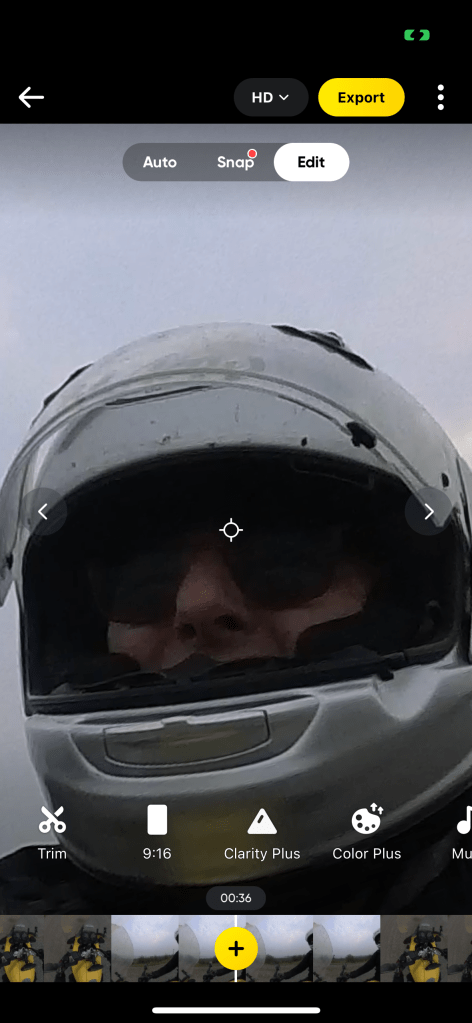
In an additional keyframe on the right above I left the camera view constant, but changed the zoom level. The result in the movie will be a slow zooming in from the left image to the right image. Remember, this is all from the same video recording.
Here a demonstration for tilting the virtual camera. If the image below were set sometime later than the zoomed-in rider frame, then the camera would slowly tilt down to show the handlebar:
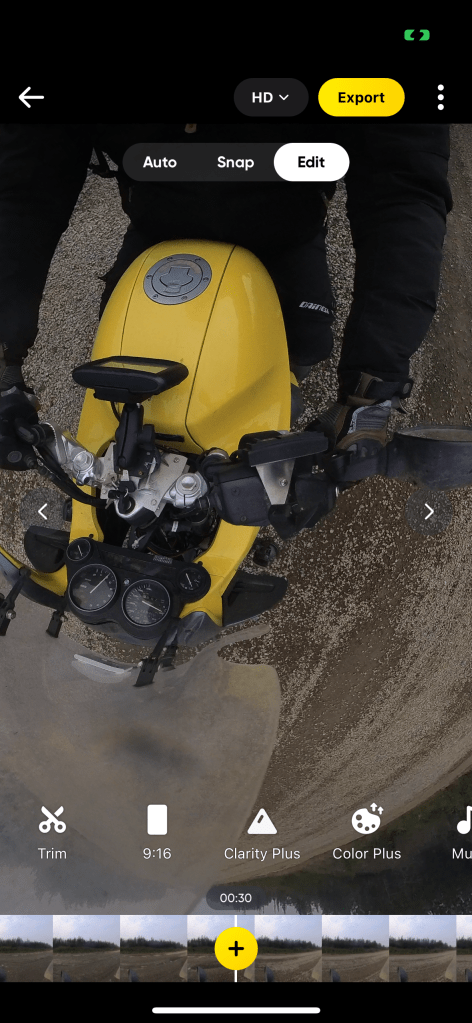
Since panning and zooming can both be changed in keyframes, we can create pan/zoom camera motions.
The crucial part to remember is that at any frame, i.e. moment in the movie, the entire view sphere, and all zoom levels are available. You just have to choose.
There are lots more options and special effects that I find distracting. The trick in the above described procedure is getting the keyframes spaced such that the movie doesn’t get boring by hovering on the same view too long. I have not mastered this skill yet.
Insta360 Baby Steps
I badly edited two short videos taken with the Insta360 3D camera while riding. One on a nice road, and one on gravel. I say ‘badly’ edited, because I had to use the unfamiliar video editor on an iPad. Some views of the ride are held too long. But these two clips should give you an idea of the riding experience. Turn on the sound for the full experience:
Renting a car in Alaska will prohibit you from driving some roads like the gravelly one above.
 Musings