I rolled through the 3000 miles odometer reading into Whitehorse. The town is the largest in the Yukon, and is its capital.
Cursed Name?
Some days ago I spoke with a First Nation woman about my upcoming route. Whitehorse was an obvious topic, because I would clearly ride though.
During this conversation I made an interesting observation. Whenever I mentioned the town’s name, the woman looked slightly to the side, and muttered ‘Whitehorse’ under her breath.
I concluded that maybe the local natives consider the town’s name cursed, and whenever someone voices the name, one needs to echo the word, lest evil befalls one’s family.
I thought this line a reasonable hypothesis. Until I noticed that during our conversation I had consistently called the town ‘Whitefish.’
The Cannabis Option
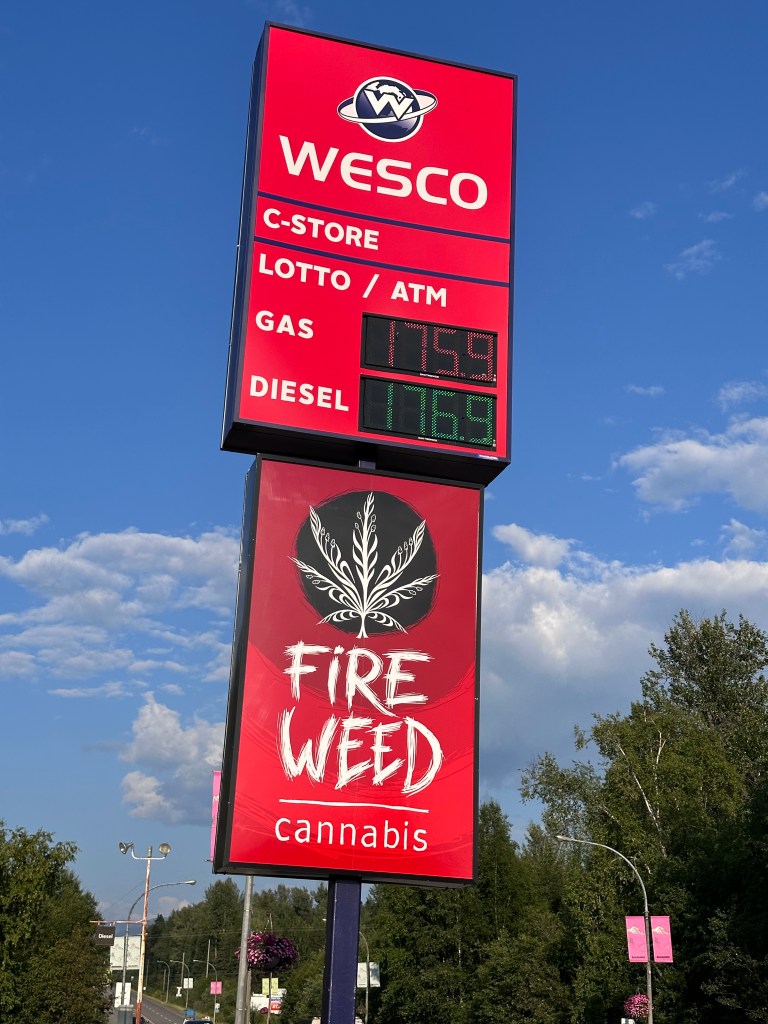
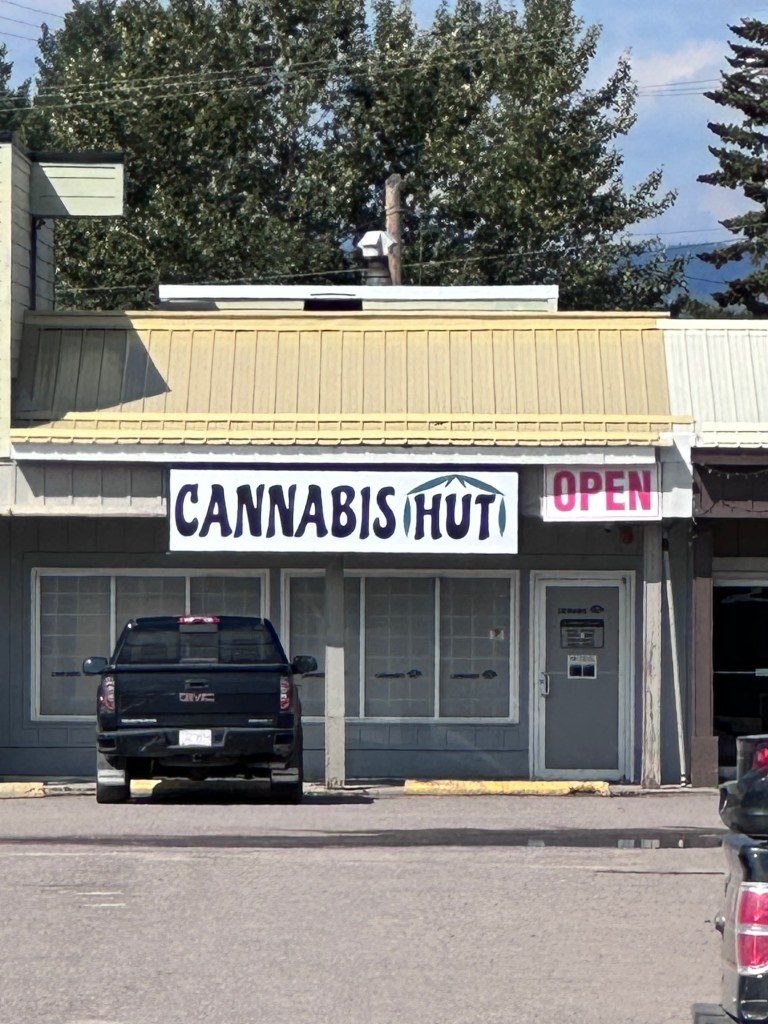
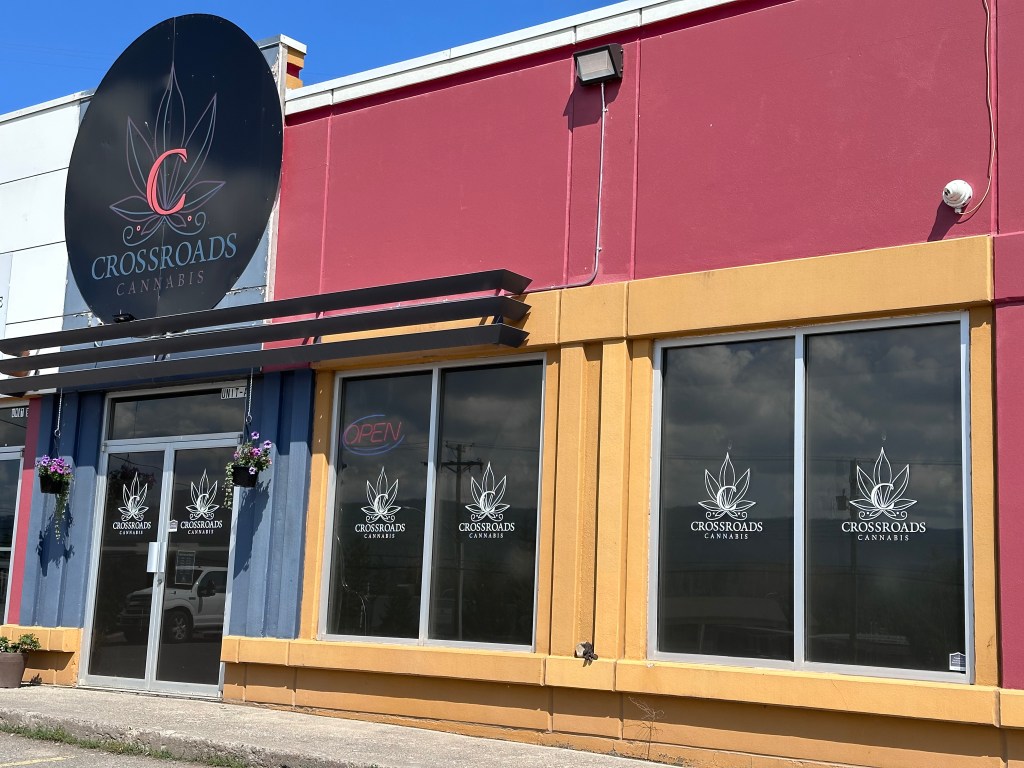
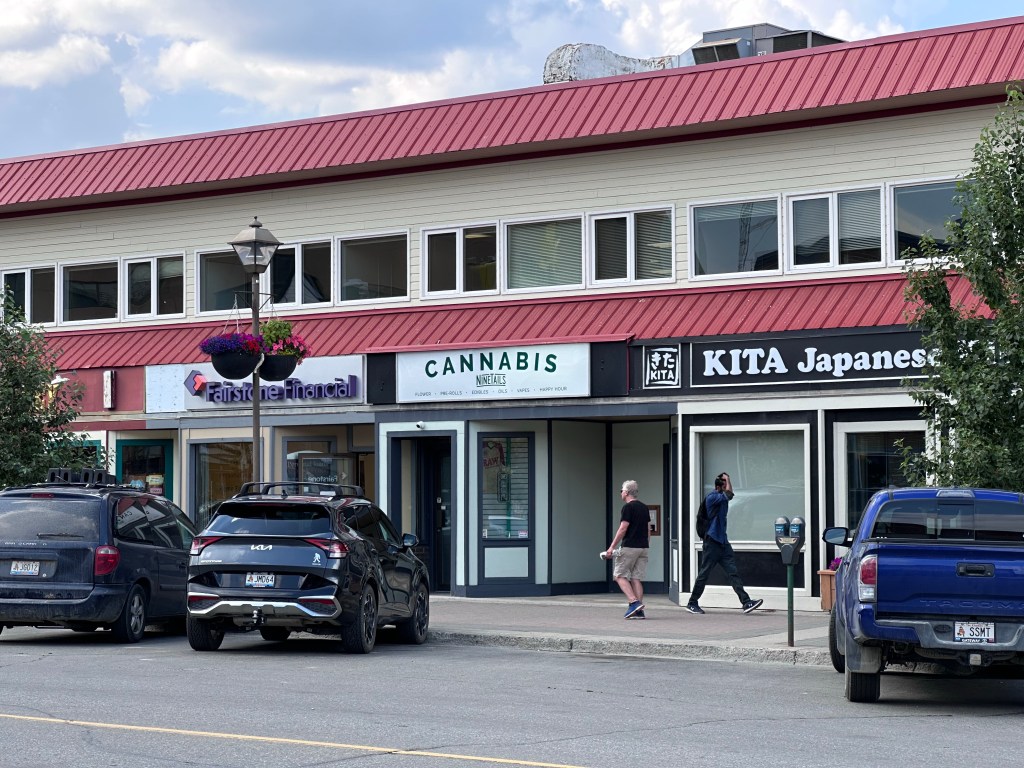
Cannabis stores are found even in the smallest villages. This purchase option renewed my thoughts about drugs. In my teens, I was sharp of mind, and sought an expanded sensory experience. Colors, sounds, I wanted them all hyper clear, and significant. Marijuana filled the bill.

Once I had kids, a kidney stone introduced me to Demerol. The reduction in sensory experience was a mind filling relief. Even after the stone, I understood: once you are a parent, and maybe once you are in a demanding job, expansion of your sensory experience is the last need you feel. Sedatives are clearly the winner during that phase in life.
Now my memory is aggravatingly unreliable. Thinking through a complex issue takes me longer than in former years. Sometimes I worry that verbalizing my understanding of a technical procedure will expose feebleness of mental power. What I need now is a mind sharpener. Speed!
The tragedy of my life’s arc, then, is that legalization of drugs that match my need always lags by some decades. Today I can trivially stop by a shop, and pick up Cannabis cookies, which are by report stronger than in the olden days. But now that’s no longer what is needed.
Analyzing a Moment of Contentment
The following observation is trivial. That shortcoming has never held me back from holding forth.
I was sitting in a restaurant here in Whitehorse; eight-thirty at night; light as in the afternoon; around 70F. I am in easy walking distance of the hotel, having a Margarita. Once I rein in my impulse to consult my iPhone for anything new, I realize that I am experiencing a moment of contentment. How is that possible?
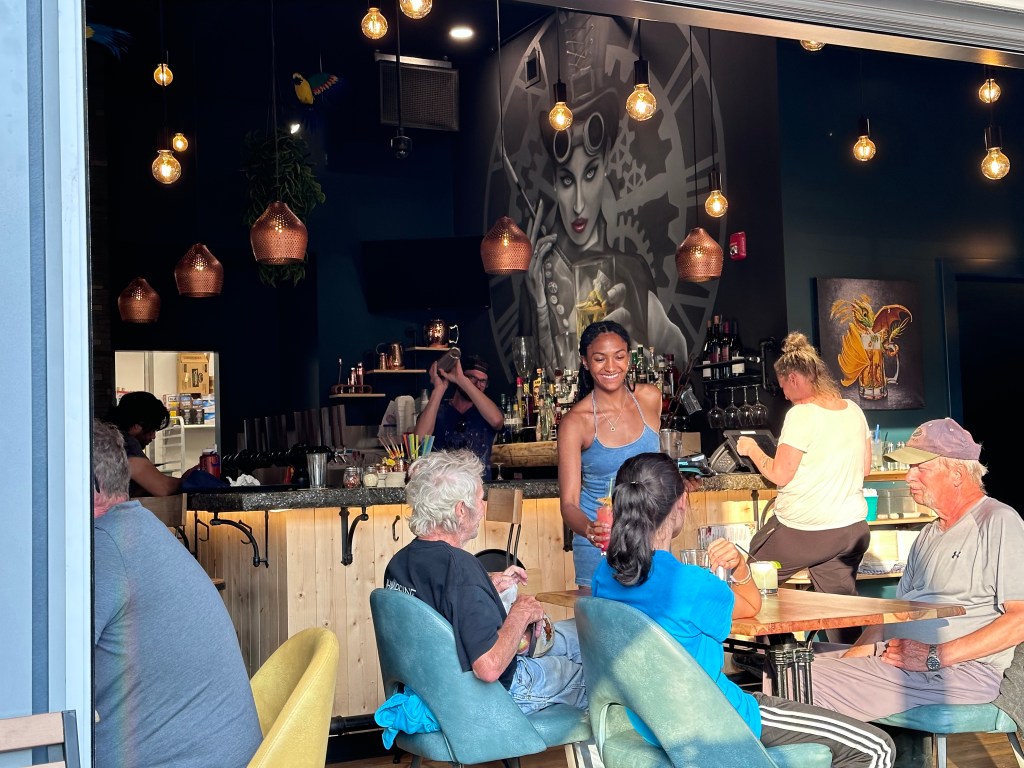
Two reasons, really. Mostly not reproducible at will.
For one, riding for some hours requires an almost subconscious degree of concentration. My mind does wonder. But a constant focus is still being fed with energy. Additionally, the scenery peacefully passing by is being noted, and integrated. These processes skim off mental energy that would otherwise auto-invest in worrying. I have it set up that way, so I don’t need to worry about how to dissipate excess energy.
Second, my problems during this trip are well defined, and countable:
- Is the bike OK?
- Do I know where the next tank of gas will be available?
- Do I have a reservation for the destination motel?
- Do I have a grip on the best overnight stop just beyond the upcoming one?
- Does that follow-on stop have accommodations available?
That list is my personal super structure atop the Maslow pyramid. It’s a list! The items can be acted upon, and checked off. Absence a catastrophe, which is always lurking, there is nothing to worry about. And given the motorcycle travel energy dissipation that I described, it is easy for me to not visualize a catastrophe. Of which at home I am abundantly capable.
The Margarita helps too.
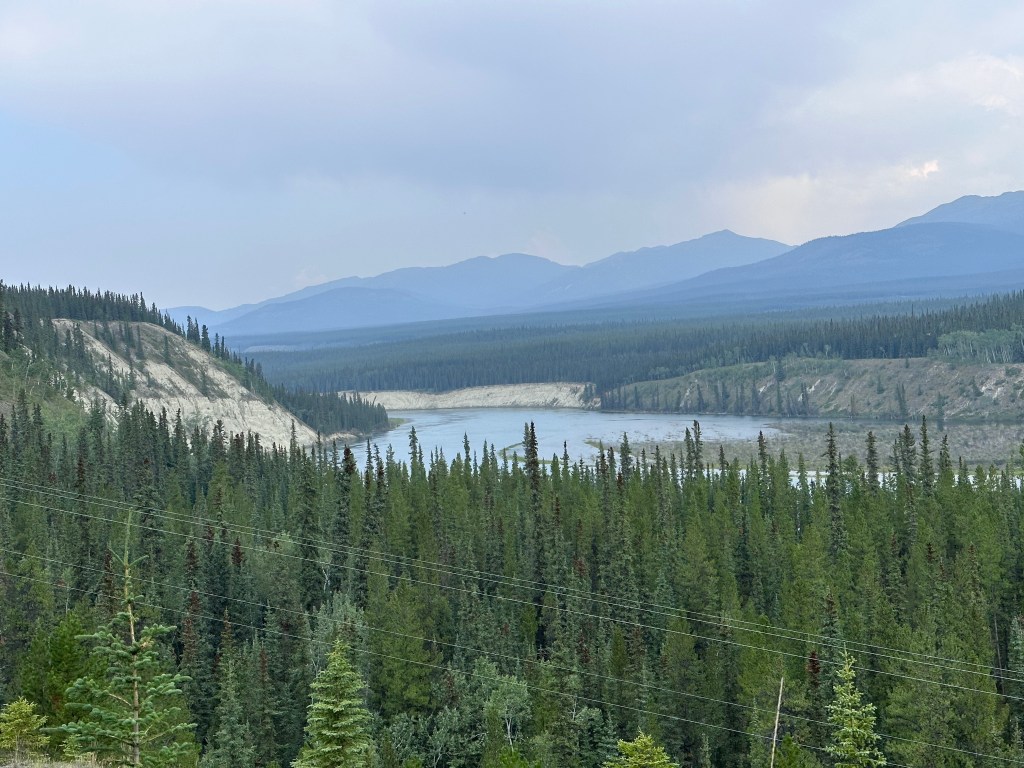
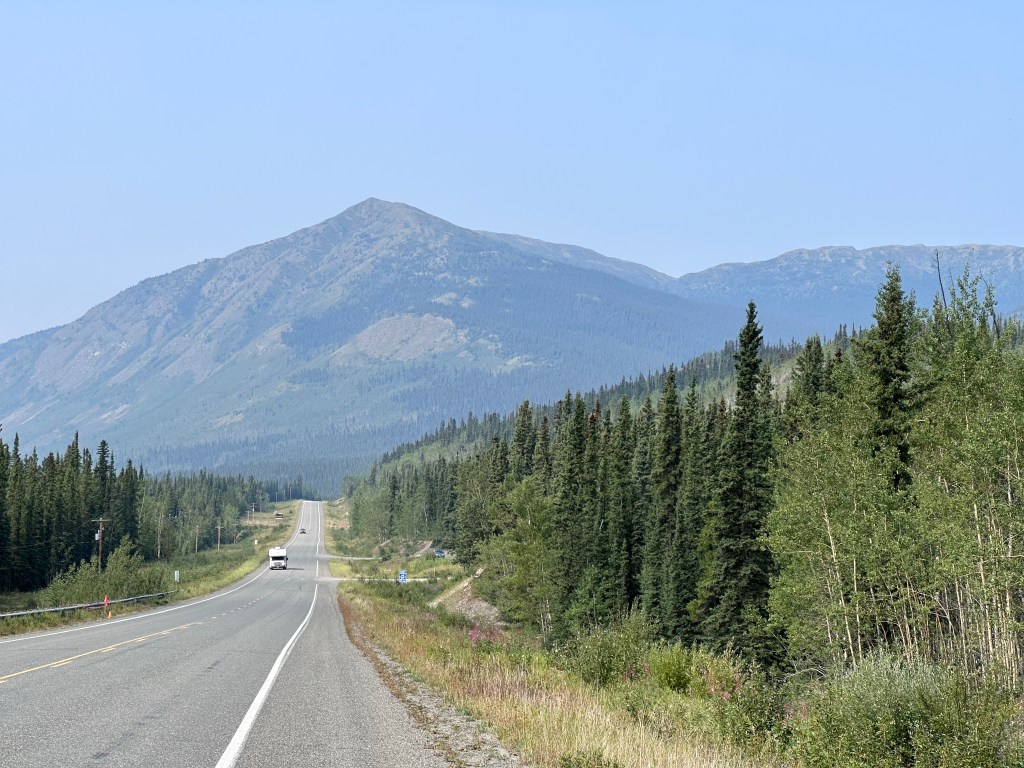
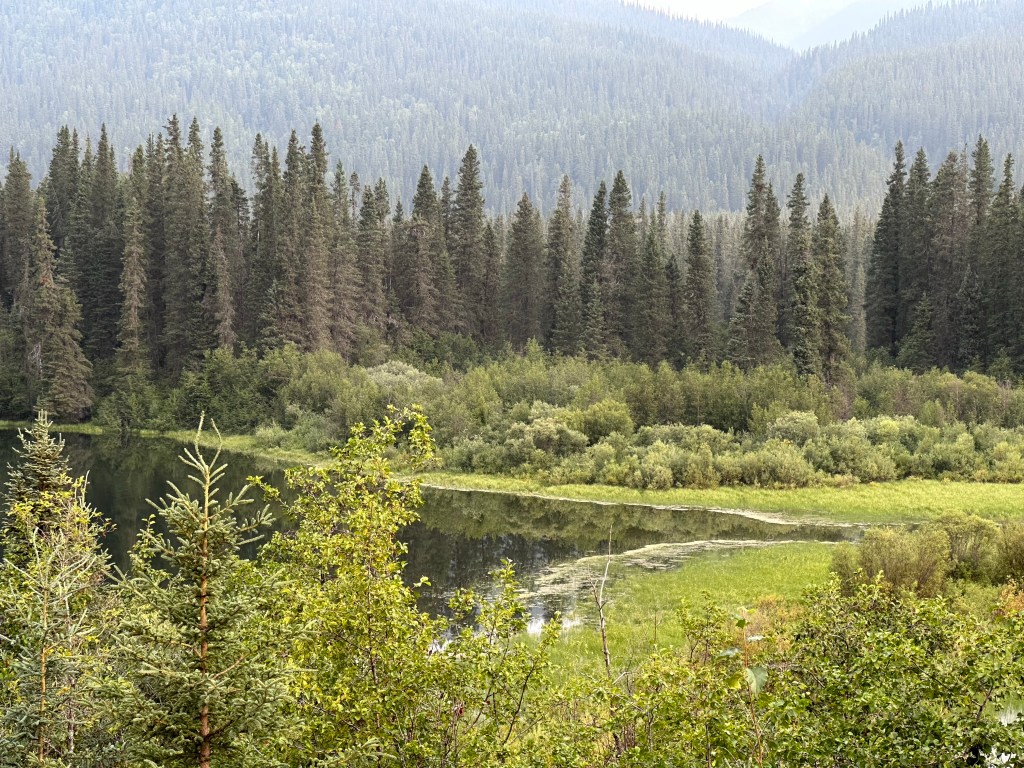
Landscape Summary

About That Bridge
Many times, all my life I heard about the Bering Strait land bridge. How handy it was! Fourteen thousand years ago the Indians used it to wander across. Mammoths came over to Alaska, and other animals.
My subconscious prejudice, again, misled me. I had assumed that the Indians, 14,000 years ago could only make stone arrow tips. But that bridge, it couldn’t have been easy for them to construct. Not just a rope bridge either: the Mammoths, they weighed six to seven tons!
However they erected what must have been a marvel to rival the Pyramids, whatever happened to that bridge? Did the Russians blow it up? Did a series of Republican administrations prioritize tax cuts over infrastructure investment, allowing the bridge fell into the sea?
But whatever; why don‘t we rebuild it again? How hard can it be?
The Yukon Beringia Interpretive Center in Whitehorse explained it all.
Yukon Interpretive Center
During glacial periods, ocean water is captured in the glaciers. Enough so that ocean water levels fall. The effect is large enough to expose land between the land masses (left).
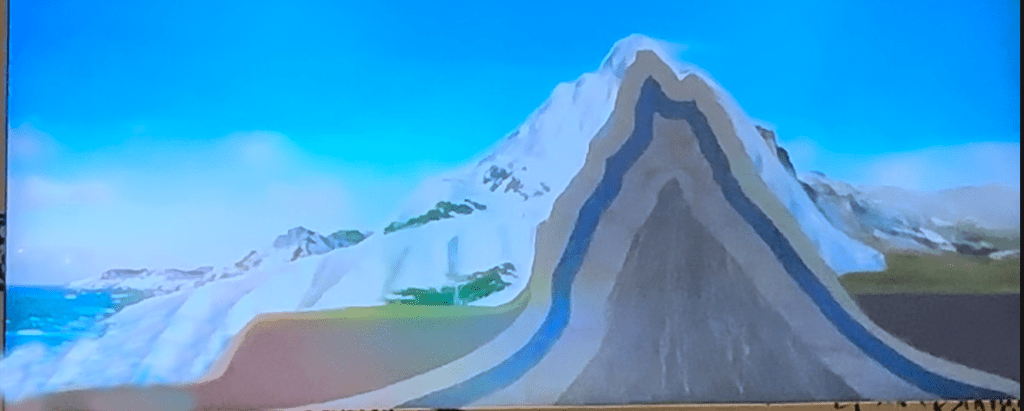
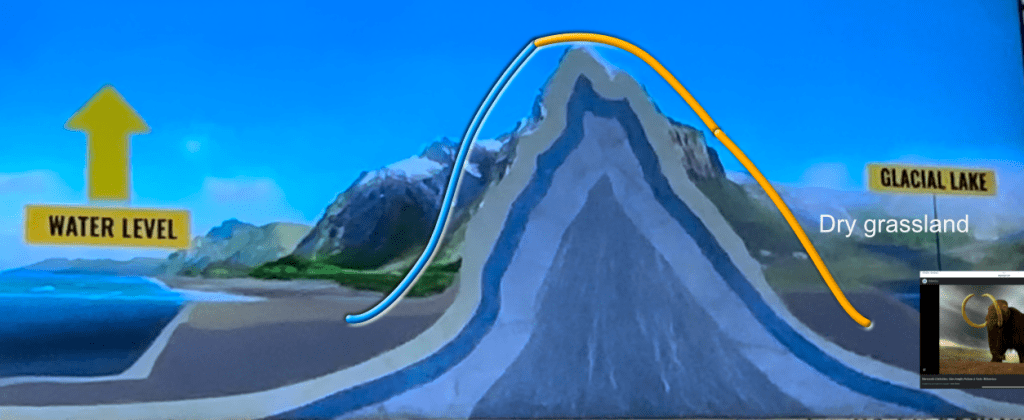
When the glaciers melt, water rises, covering the land bridge. Eastward wind from the ocean is cooled on its path up the mountains (right). On the East side, cold, but dry wind blows. This condition induces grasslands that remain mostly uncovered. Grazing animals, such as mammoths, musk ox, and horses thrive. They feed arctic lions, as well as the short-faced bear. All, in turn, are hunted by humans that crossed the previously exposed land bridge.
That submerged landmass is just 80m deep, which is not a lot. In Hanes Junction, the next stop, we will be at the foot of these mountains, on the East side.
 Musings